Marseillan and the secret of Noilly Prat
Marseillan is fifteen minutes from the house, heading towards the sea. It’s a fishing village that has kept its quiet character, even in high summer. And it’s where Noilly Prat is made, the most famous dry vermouth in the world.
A village by the water
Marseillan doesn’t have the crowds of Cap d’Agde or the bustle of Sete. It’s a village that lives at its own pace, with a small port on the Thau lagoon, stone lanes, and plane trees on the main square. In the morning, you’ll see fishermen mending nets and regulars at the cafe.
The port looks straight out onto the lagoon. You can see the oyster parks in the distance, colourful boats tied up at the quay. It’s calm, it’s lovely, and the food is good.
The Noilly Prat cellars
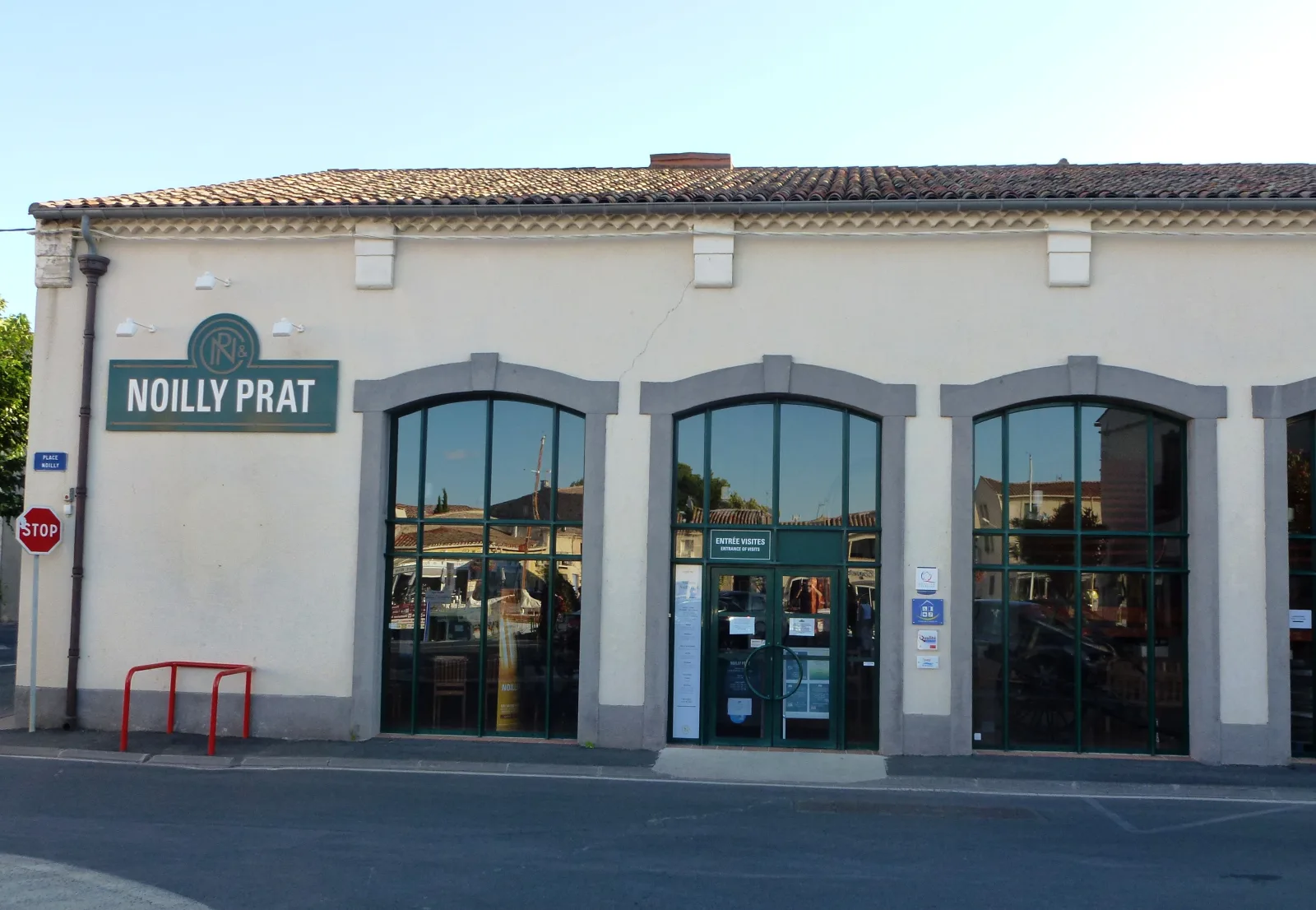
This is the main reason to come to Marseillan. The Noilly Prat cellars have been here, right by the lagoon, since 1813. The vermouth is made on this site and nowhere else.
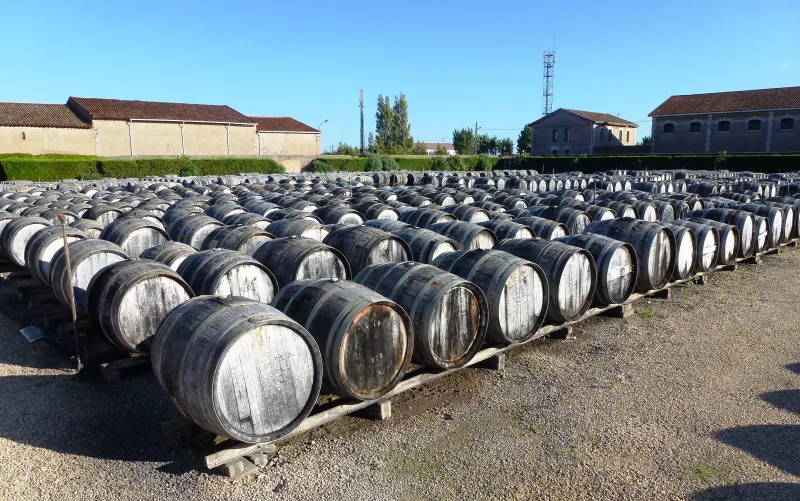
The guided tour lasts about an hour. You learn the whole process: white wines (Picpoul and Clairette from Languedoc) are first aged outdoors in oak barrels, exposed to sun, wind, and the salt air off the lagoon. That’s what gives Noilly Prat its particular taste, that hint of iodine and oxidation that indoor cellars couldn’t produce.
Then comes the blending with herbs and spices. The guide explains the recipe (well, the part they’re allowed to share). The tour ends with a tasting. The Noilly Prat Original Dry is crisp, complex, very different from what you might expect of a vermouth. The Ambre is softer, almost syrupy.
I’d recommend booking ahead in season. Tours run regularly but slots fill up fast in July and August.
Walking around the village
After the cellar tour, take time to walk around. The village centre is small, you can see it all in half an hour. Place Carnot is shaded, with a fountain and a few terraces. The church of Saint-Jean-Baptiste is worth a look.
Walking down to the port, you’ll pass fishermen’s houses with coloured shutters. Some have become galleries or shops, but the village hasn’t tipped into full tourist mode.
Where to eat
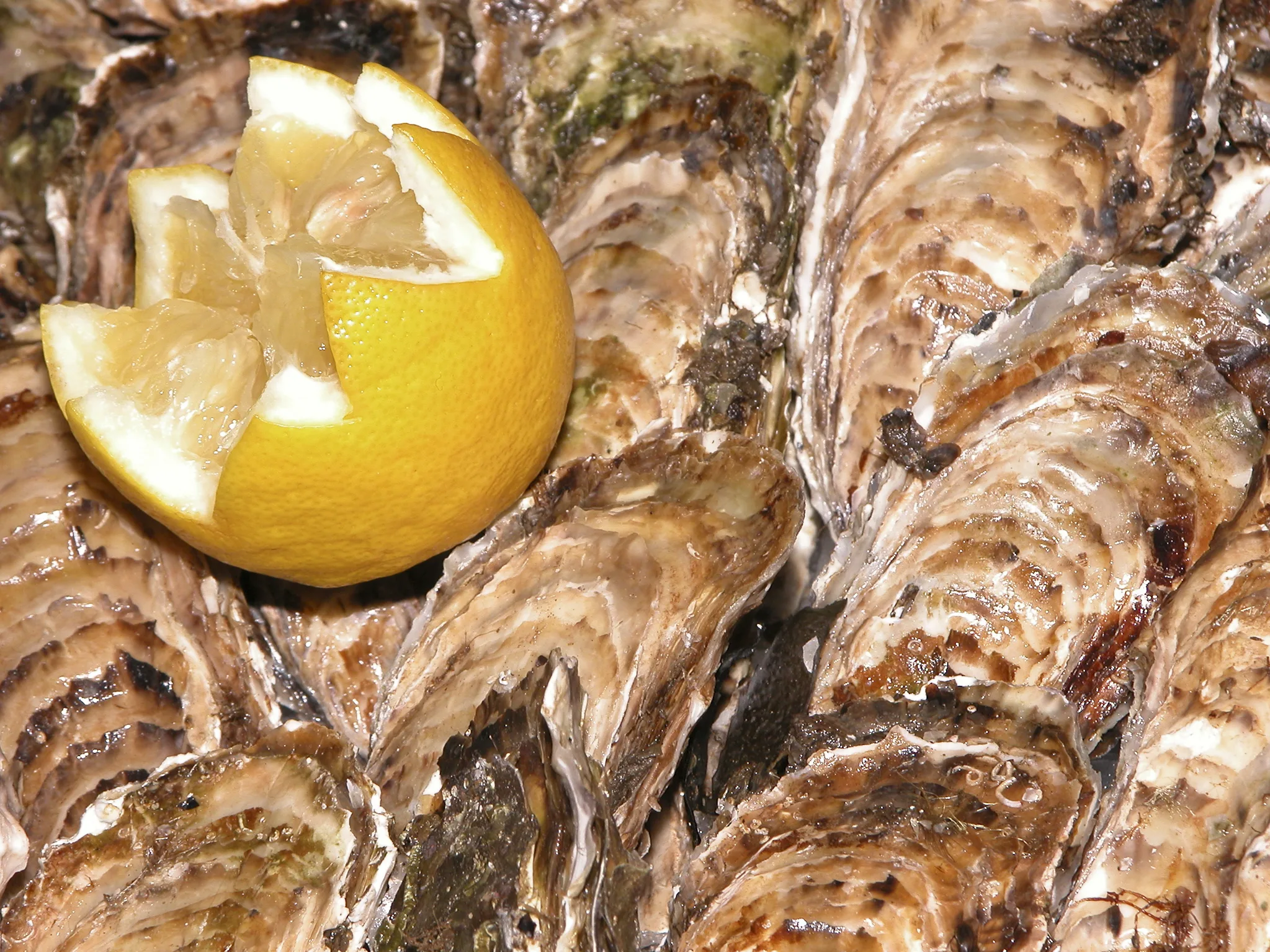
On the port, several restaurants serve seafood and fish. Prices are reasonable compared to Sete. Oysters from Bouzigues, mussels, and tielles (octopus pies, a Sete speciality) are on every menu.
For a simple meal, the restaurants along the port do good plates at fair prices. If you’d rather have a glass of wine with a sharing board, the port bars do the job.
Marseillan beach
Marseillan-Plage is the village’s seaside extension, a few kilometres from the centre. It’s a long sandy beach, less crowded than the beaches at Cap d’Agde next door. Le Robinson, right at the end, is a well-known beach restaurant.
But honestly, if it’s the beach you’re after, there’s no shortage around here. What makes Marseillan special is the village and the Noilly Prat.
Getting there from Florensac
By car, it’s straightforward: take the D51, fifteen minutes at most. You can also cycle through the vineyards, it’s flat and pleasant (about 30 minutes).
If you’re making a day of it in this area, Marseillan combines well with Meze or Bouzigues on a loop around the Thau lagoon. You can easily do all three in one day.
Practical information
- Distance from Florensac: 10 km (15 min by car)
- Noilly Prat tour: daily, guided tours of 45 min to 1 hour. Adult ticket around 8 euros. Booking recommended in summer at noillyprat.com
- Market: Tuesday morning (market square)
- Parking: free in the centre, paid near the lagoon in summer
- Combine with: Meze, Bouzigues, Thau lagoon loop
Marseillan is one of those places where you tell yourself you’ll stay an hour and end up spending the afternoon. From our house, it’s an easy detour, and the Noilly Prat tour is something you won’t find anywhere else.