Agde the Black: the basalt city
Agde is fifteen minutes from Florensac, yet it feels like a different world. When you first walk in, what strikes you is the colour. Everything is black. The walls, the churches, the quays along the Herault river. This dark stone is basalt, spewed out by Mont Saint-Loup 750,000 years ago. The Greeks used it to build Agathe Tyche twenty-six centuries ago. The locals still do.
A Greek city in Languedoc
Agde was founded around 550 BC by colonists from Phocaea, like Marseille. It was a trading post at the mouth of the Herault. Not much from that era is visible above ground, but the Ephebe Museum holds some remarkable pieces, including the Ephebe of Agde, a Hellenistic bronze fished out of the river in 1964. On its own, it’s worth the museum visit.
The museum is small, well done, and the underwater collection (amphorae, anchors, ship fittings) tells the story of the ancient port better than any information panel could.
The fortress cathedral
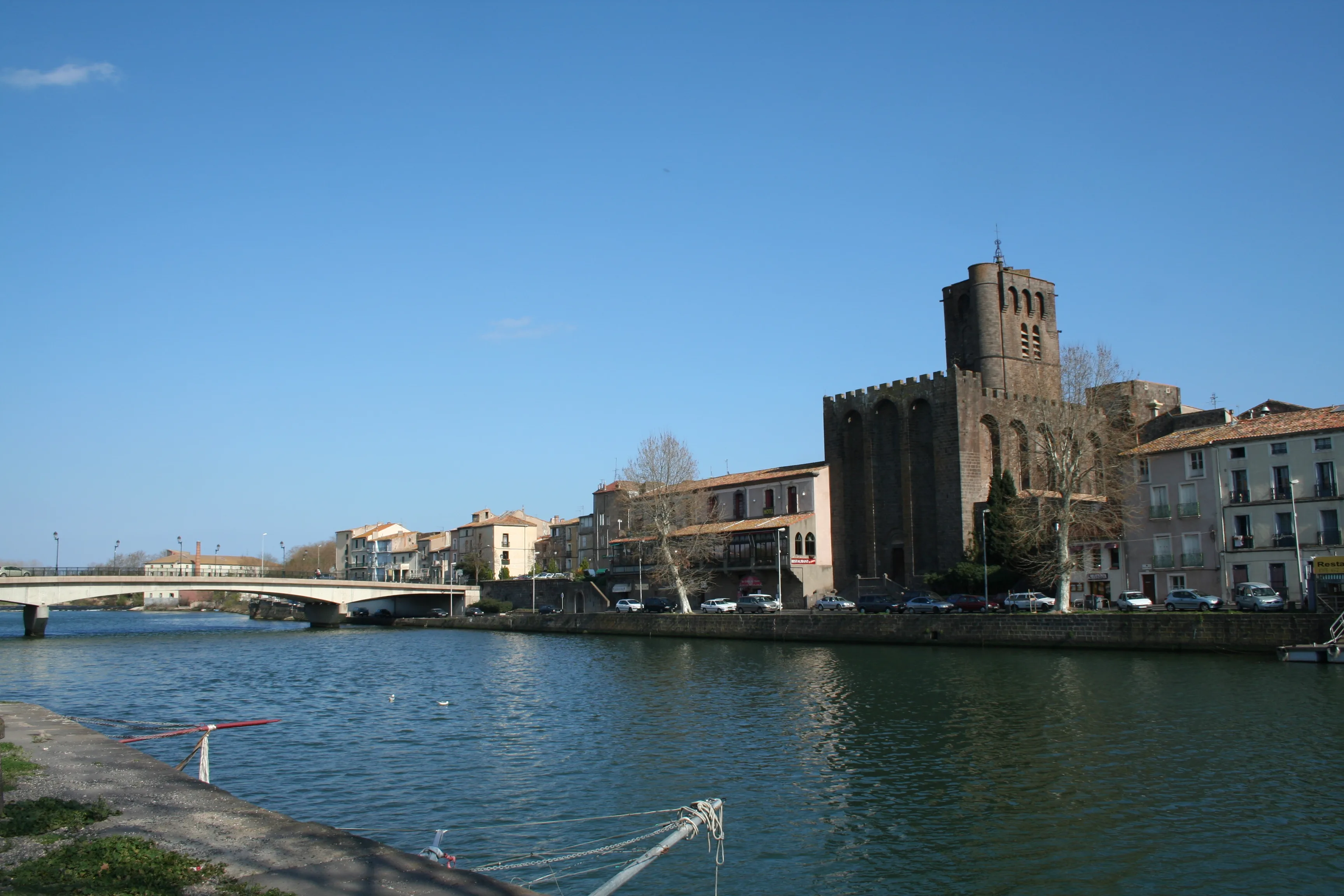
The Cathedral of Saint-Etienne is Agde’s most striking building. Built in the 12th century from black basalt, it looks more like a castle than a church. The walls are two metres thick, and you can still see the battlements at the top. It served as a refuge during attacks. Inside, it’s austere and massive. Light barely enters through the arrow slits.
The Herault riverbanks
Walking along the Herault is the best way to discover Agde. You follow the black facades reflected in the water, past bridges and boats. The area around the Glaciere (a 17th-century icehouse) is pleasant, with a few shops and cafes.
The old bridge has spanned the Herault since the Middle Ages. From there, the view of the cathedral and the quays is the best you’ll get. In the evening, when the sun hits the dark facades at a low angle, the basalt takes on an almost violet sheen.
Mont Saint-Loup
This is the volcano that supplied all the stone. Mont Saint-Loup rises to 113 metres, making it the highest point on the coast between Sete and the Pyrenees. You can walk up in about 30 minutes from the car park. At the top, the view stretches over the sea, the Thau lagoon, the vineyards, and on a clear day all the way to the Pyrenees.
The path is wooded and shaded, pleasant even in summer. It’s a short walk that combines well with a visit to Agde.
Don’t confuse it with Cap d’Agde
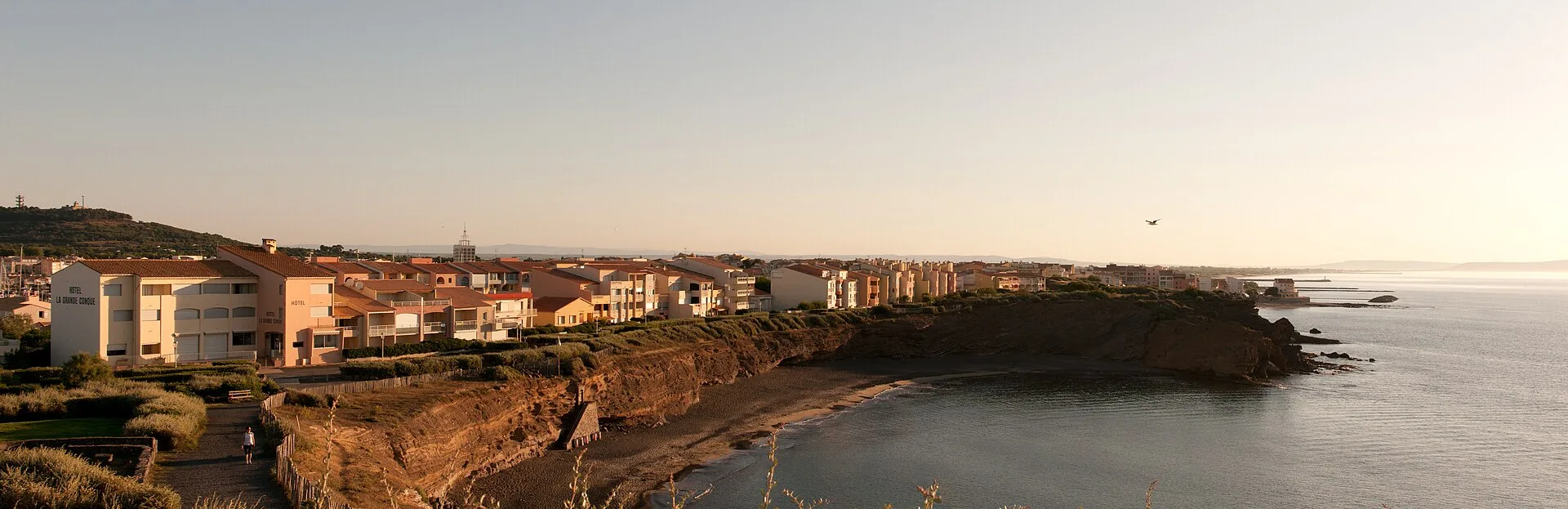
Cap d’Agde is the seaside resort built in the 1970s. It’s a different world: apartment blocks, managed beaches, amusement parks. The two have nothing in common. Old Agde has twenty-six centuries of history. The Cap is a recent tourist creation.
I mention this because many people who go to Cap d’Agde don’t even know that Agde exists five minutes away. That’s a shame. If you’re at the Cap for the beach, take at least an hour to head up to the old town.
Where to eat
The options are decent without being extraordinary. On the quays, La Perle Noire does good fish at mid-range prices. For a quick lunch, the bakeries and delis in the centre are reliable.
Agde’s market is on Thursday mornings and it’s a good one, lively, with local producers.
Getting there from Florensac
By car: D51 then D612, twelve minutes. By bike, about 25 minutes on the small road (it’s flat). In summer, shuttle buses connect Agde to Cap d’Agde.
Practical information
- Distance from Florensac: 8 km (12 min by car)
- Ephebe Museum: open all year except Mondays. Adult ticket around 6 euros. Free on the first Sunday of the month
- Cathedral of Saint-Etienne: free access
- Mont Saint-Loup: free access, car park at the base. 30-minute walk up
- Market: Thursday morning
- Parking: free on the outskirts, paid in the centre in summer
Agde is one of those towns you come back to. The first time out of curiosity about the black stone, and after that for the pleasure of walking along the Herault. From Florensac, it’s the shortest detour for a real change of scenery.
You might also like